
About
/
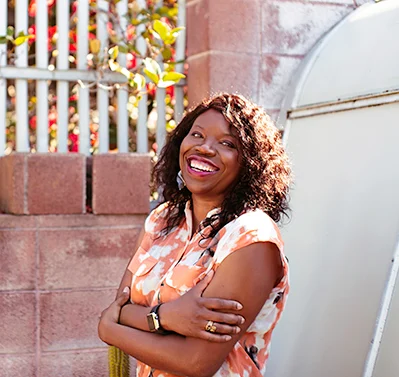
↑ PHOTO CREDIT: Tom fitzgerald
Holding Space | Spring 2024
"anger. is often grief that has been silent for too long.”
- nayyirah waheed
Spring normally feels like a time for renewal and celebratory transitions. This spring has instead felt marked by the continuing horrors in Gaza and the corresponding protests, which have been met all too often with violent crackdowns rather than intentional and critical conversations. The air feels heavy with frustration, hopelessness, and broken trust.
We also are in close proximity to anniversaries that evoke similar heaviness for me. In the next few months, we will come upon the 10-year anniversaries of the killings of Michael Brown in Ferguson and Eric Garner in New York. And recently, we marked 4 years since the lives of Breonna Taylor, Ahmaud Arbery, and George Floyd were cruelly taken.
It’s a lot to hold…so take a breath.
Last fall, I visited the corner of 38th and Chicago in Minneapolis, the place where George Floyd was killed, for the first time. Walking through the neighborhood, I passed the iconic fist sculpture, the "Say Their Names” Cemetery, and a storefront gallery displaying photographs from those first few weeks after the tragedy. I was struck by the profoundness of being in a place that had not only been a site of immense anger and grief but also had to find its way to what comes after. Signs of a celebration of life were all along the street, including a vibrant and engaging brass band playing in the abandoned gas station across from where he was killed. Unbeknownst to me, I had chosen to visit on what would have been George Floyd’s 50th birthday.
The site in front of Cup Foods, where he took his last breaths, had been transformed into a part shrine, part testament to the reimagining of a better future. As I stood on that corner, I simultaneously took in both the grief of the memorial and the joy of the band’s rendition of Stevie Wonder’s "Happy Birthday.” I didn’t know whether to sing or cry. But I did feel viscerally reconnected to both the loss of life and the resiliency and urgency of the fight for justice.
Sometimes, tragedies can mobilize people to occupy and transform spaces in ways that demand we see and discuss the complicated truth of the horrific things that human beings have the capacity to do to one another. Last week, I was on a college campus recently cleared of protesters but still fenced off. The crackdown and fencing didn’t return the campus lawn to a neutral space. Instead, it removed the opportunity for the place to hold space for the critical and necessary conversations about the harm that has been done, the ways we are intertwined with it, and how we might move forward. And the lack of space for that feels like a loss for all of us.
Till next time,
Liz Ogbu
Designer, Spatial Justice Activist, Grief Worker
Founder + Principal, Studio O

Kindlewood (formerly Friendship Court) has been a low income housing community in Charlottesville, VA, and historically home to 150 families. Since 2016, Studio O has supported Piedmont Housing Alliance and a resident-led advisory committee in Kindlewood’s evolution into a completely mixed-income neighborhood of 450 families using a zero displacement- and spatial justice-centered approach. Earlier this year, the first set of families moved into the completed Phase 1. Last week, the National Endowment of the Arts awarded the project a prestigious Our Town grant to support the collaborative creation of a cultural + storytelling installation in the public space coming as part of Phase 2. Learn more about this innovative project here.
Image by Ra’Shawn Johnson

For 12 years, Design Futures has brought together students, scholars, and practitioners from around the country to learn and discuss legacies of harm and oppression in the built environment and imagine ways to foster collective healing and thriving. Studio O has been active in Design Futures since its founding. We were part of the organizing infrastructure and teaching faculty at this year’s Forum, which was hosted by Washington University in St. Louis. Visit the program’s website to learn about participating in Design Futures or donating to support its important mission.
Image by Jose Cotto

Image by City of Akron
In the last newsletter, we shared the Reconnecting Our Community - Phase 1 Report, which chronicled the community visioning process for a decommissioned stretch of Akron’s Innerbelt highway. Building on that important work, the City of Akron won one of 45 grants in the first round of the federal Department of Transportation’s Reconnecting Communities program. The grant will fund a comprehensive planning process that will advance the community visioning work. In March, the City issued an RFQ for that process. Studio O will remain involved and we’re excited to continue supporting this important project as it moves forward.
In case you want to explore the ideas that underpin our work further, you can always find more media and more resources on the website!
Sign up for our mailing list to stay up to date with Liz and Studio O
Privacy Policy - COPYRIGHT LIZ OBGU / STUDIO O 2023-2026


Before you go… If this conversation resonated with you, I’d love to continue it.
Holding Space is an occasional newsletter exploring design, justice, grief, healing, and the work of creating possibility.


