
About
/
↑ PHOTO CREDIT: Tom fitzgerald
Holding Space | Summer 2026
"Another world is not only possible, she is on her way. On a quiet day, I can hear her breathing.”
– Arundhati Roy
I suppose that spring could be thought of as a time of possibility. The sun graces us with more hours of its presence each day. Meanwhile, my walks have been filled with sightings of tiny goslings, baby squirrels, and budding flowers—all bursting in their emergence. But for me, perhaps the biggest show of possibility came earlier this spring with Artemis II, the NASA mission that sent three Americans and one Canadian on a 10-day voyage to circumnavigate the moon.
Wars, political scandals, and economic uncertainty can more often than not make time feel broken, so it’s hard to believe that the Artemis mission occurred just two months ago. I was a little late to the Artemis fandom, surprising given my childhood dream to be an astronaut and my love of certain Star Trek series (STNG and Discovery for those of you who track such things). I had been too distracted by the dueling crises of the moment. But once I tuned in, I was riveted. To the photos showing the stunning beauty of celestial bodies and the expressions of awe that often trumped the scientific vocabulary the astronauts had studied up on in the months prior. To the story of the uniform patch worn by the Canadian astronaut and designed by an Anishinaabe artist that told a story not of conquest but of the Seven Sacred Laws that connect humanity to Turtle Island (Earth). To the videos of interactions between a crew whose different identities and histories seemed to only make their bonds richer. In a time dominated by images of excess, from gold-gilded statues and ballrooms on Earth to multimillion-dollar private tourism flights to space, Artemis II felt like a reminder that things could be different. A reminder that a different future, seemingly of a different world than the one we’re slogging through, could be possible.
I’ve been thinking a lot about possibility lately. Not as an escape from the chaos of the economic, social, and political disruption that feels ever-present, but as a walking reminder of what a different vision of the future can be. I’ve written before about the need to treat hope as an active practice. I’ve also talked about being present to the pain and grief that comes from living in a time of rupture. But I wonder if experiments in possibility—be it an Artemis mission to the moon or a mutual aid system on Earth—is the thread that helps us create something more whole out of the broken fabric that now surrounds us.
In a few weeks, the United States will celebrate the 250th anniversary of its “founding.” As I look at the context of harm in which it is occurring—which to be honest, is not new, just louder, more emboldened, and more widespread in its impact—I can’t help but think of a line from a song that I heard the singer Tristan Marcelle recently perform: We are inheritors of incredible horrors. Looking ahead to July 4th, it would be easy to approach the day with disgust, denial, or ambivalence. But then I remember the second part of Marcelle’s lyric: but we are also the protectors of the possibilities of dreams not yet lived. What would it look like if we approached the holiday as weavers of possibility? To find a way, be it large or small, to connect with others and hold space for both acknowledgment of what we have been and practicing what we could be?
I’m not sure yet what I’ll be doing that day. But rather than looking away with dread, I’m looking towards it with clear eyes and open ears so that I can not only see and hear but also be an active part of shaping what’s coming. What about you?
Take good care,
Liz Ogbu
Designer, Spatial Justice Activist, Grief Worker
Founder + Principal, Studio O
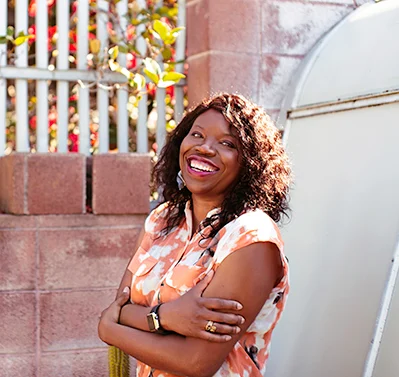

Image by Sasaki
The Akron Innerbelt Master Plan reached a major milestone this May when Akron City Council approved a resolution expressing full support for the plan’s adoption. The plan builds on Studio O’s early-stage work to help reimagine the future of the former Innerbelt site through a community-centered healing and visioning process. Recently, we completed a follow-up project advising city staff and the community advisory group on a stewardship framework for the plan’s implementation. Studio O is now partnering with two local organizations on a new initiative to support formerly displaced residents and their descendants in addressing unprocessed grief. We look forward to sharing more in a future newsletter.

Image by Piedmont Housing Alliance
It has been a busy few months in the ongoing redevelopment of Kindlewood, the resident-centered, zero displacement transformation of a low-income housing community into a mixed-income neighborhood in Charlottesville, VA. Piedmont Housing Alliance, the nonprofit owner, recently hosted a lottery for Phase 2. During the celebratory event, Phase 2 residents selected the order in which they’ll choose their future homes, with priority going to the longest tenured residents. In addition to housing, one amenity coming online in Phase 2 is the first part of a new city park. Residents are contributing to that effort too with the EMBRACE Committee (Empowering Memory & Belonging through Revival, Art, Culture, and Exchange) selecting the artist team of _mpathic design and Office of Things to lead the design of a commemorative public art installation. Learn more about Studio O’s work in Kindlewood here.

Image by Patty Heyda
This spring, Liz Ogbu joined final reviews for Centering Change, a hands-on architecture and design studio at Washington University in St. Louis led by Professor Patty Heyda through the university’s Sam Fox School of Design & Visual Arts. Working alongside local partners, students presented ideas for a new community healing complex in a nearby community. The projects explored how architecture can support personal and communal healing, remembrance, and care within the context of grief and racialized harm. It was meaningful to spend time with the students and community members reflecting on the architectural possibilities of reparative transformation. We look forward to seeing how the local partners continue to advance the work.
In case you want to explore the ideas that underpin our work further, you can always view previous newsletters, find more media and more resources on the website!
Sign up for our mailing list to stay up to date with Liz and Studio O
Privacy Policy - COPYRIGHT LIZ OBGU / STUDIO O 2023-2026


Before you go… If this conversation resonated with you, I’d love to continue it.
Holding Space is an occasional newsletter exploring design, justice, grief, healing, and the work of creating possibility.


