
About
/
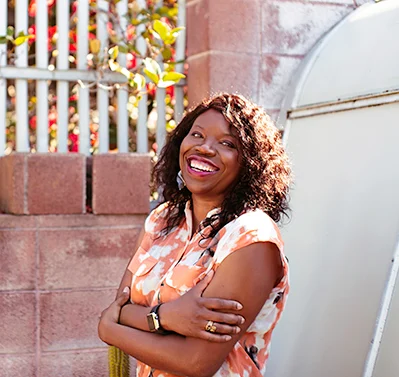
↑ PHOTO CREDIT: Tom fitzgerald
Holding Space | Fall 2026
"One can tell a great deal about a country by what it chooses to remember… One can tell even more by what a nation chooses to forget.”
– Lonnie Bunch III
Earlier this summer, while at Ragdale, an artist residency about an hour north of Chicago, I took a walk with some of my fellow residents after an intense summer storm. The inclement weather had come through earlier that afternoon, accompanied by waves of pounding rain and fierce winds. The walk revealed the storm’s punishing effects: not only were there downed branches strewn across yards and streets, but there were also large, toppled trees, altering the neighborhood landscape. The trees were literally uprooted, their trunks now horizontal. Their base and roots were no longer sitting on the ground but standing perpendicular to it.
I didn’t know how old the trees were, but judging from their size, I thought some might be old enough to remember when Indigenous tribes stewarded the land. By the time I headed home a week-and-a-half later, some of the felled trees had been cleared. As their remnants disappeared from view, I wondered how people would remember what had been lost after the timber had been chopped up and the holes in the ground had been filled. The next set of residents who would follow my cohort likely wouldn’t even know that the landscape they looked at was now marked by what was no longer there.
I’ve been thinking a lot about memory and memorialization lately. Perhaps inspired by how we just passed the 25th anniversary of 9/11. I spent the day at an antiracist community development conference where we began by observing a moment of silence for all those who lost their lives. Later, I headed to the airport to make my way home. Listening to the chatter of other travelers, I wondered who else had a moment of observance that day and who had experienced it as just “Friday.”
Or maybe memory is on my mind because of another big anniversary that will come next week. The Smithsonian’s National Museum of African American History and Culture, also known as the Blacksonian, will turn 10. The museum’s Founding Director, Lonnie Bunch III, just announced that he would resign his role as Secretary of the Smithsonian at the end of the year, seemingly another casualty of the current presidential administration’s steady assault on historical and cultural stories that don’t align with their narrative project.
From Charlottesville to Akron to San Francisco, the work that my studio and I do often engage with communities and in places where memory—of what has disappeared or might do so soon—is in a state of erosion. Sometimes from displacement. Sometimes from changing landscapes. And at times, even from desires to “forgive and forget.” To me, it’s part of why remembering is such an important part of the healing and imagining process. The vision that people carry of the future is often influenced by the past. And time and time again, I often find that the stories people have of the past can set the tone for what they believe needs to be fixed, what it’s possible to hope for, and who can be trusted in the process to get there. If we can’t create a shared understanding of where we’ve been, both the hurts and the triumphs, how can we possibly create a solid enough foundation to build where we want to go? If building the future is to be a collective project, it seems that how we remember the past needs to be one too.
In a time of incessant crises and scrolling screens, it can feel like there’s not enough time to tend to remembering. But I can’t help but wonder if making it an active practice—one that we do together—is precisely what’s needed to make it through these times. It may seem like a daunting task, but at the conference last week, I was reminded that sometimes, the first step is as simple as someone supporting a small group of people to gather and have the time and space to share what’s on our hearts.
Take good care,
Liz Ogbu
Designer, Spatial Justice Activist, Grief Worker
Founder + Principal, Studio O

Images by Resident Association Leadership
As we’ve shared in previous newsletters, Studio O has been supporting the formation of a Resident Association in Kindlewood as the property continues its zero-displacement model for low-income housing redevelopment. Following a community design process last year, six leaders have been elected by the Kindlewood community and are now preparing to begin their work together. The association will provide a platform for resident voices across the property while supporting the growth of community leadership. With Phase 2 of the redevelopment set to open later this year, bringing new homes and community amenities to Kindlewood, we’re excited to see this new chapter of resident leadership take shape alongside the community. We’ll share more about Phase 2 in our next newsletter. Learn more about Studio O’s work in Kindlewood here.

Image by National Urban League
This summer, Liz has had opportunities to speak with audiences about the role of design in shaping healthier, more equitable communities. She recently took part in the National Urban League’s Health Equity Webinar Series to discuss community infrastructure, investment, and what it takes to create places that support health, dignity, and opportunity. She also joined the My Black Space podcast to reflect on her journey from architecture school to founding her own practice and her commitment to disrupting the status quo in our built environments. Across both conversations, Liz reflected on how racial and spatial justice, community healing, and more equitable approaches to design can help us imagine and build places where people can thrive. Watch the webinar here and listen to the podcast episode here.

Image by Piedmont Housing Alliance
Studio O has space to welcome a new project into the practice in the coming quarter. We work across a range of projects, from antiracist housing to community-centered impact measurement. Our work engages with issues such as spatial justice, community-centered planning and design, and collective grief. Are you working on a project where questions of place, community, justice, or healing are central? Explore our Work and FAQ pages to learn more about our practice, and get in touch through our Connect page if you’re interested in hiring or collaborating with Studio O on your next design or strategy challenge.
Holding Space is brought to you by a small but mighty team: Ariana Allensworth (writer and editor), Elizabeth Cumbo (editing support), Rose Koppy (enthusiastic reader), and Liz Ogbu (writer and editor).
If you’d like to explore the ideas that shape our work, you can browse past newsletters, media, and additional resources on our website!
Sign up for our mailing list to stay up to date with Liz and Studio O
Privacy Policy - COPYRIGHT LIZ OBGU / STUDIO O 2023-2026


Before you go… If this conversation resonated with you, I’d love to continue it.
Holding Space is an occasional newsletter exploring design, justice, grief, healing, and the work of creating possibility.


