
About
/
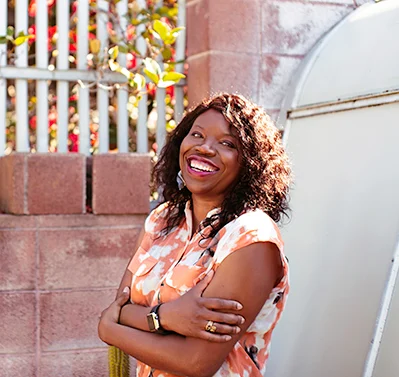
↑ PHOTO CREDIT: Tom fitzgerald
Holding Space | Fall 2025
"An old world is dying, and a new one, kicking in the belly of its mother, time,
announces that it is ready to be born. This birth will not be easy, and many of us
are doomed to discover that we are exceedingly clumsy midwives. No matter, so
long as we accept that our responsibility is to the newborn: the acceptance of
responsibility contains the key to the necessarily evolving skill."
– James Baldwin, "Epilogue: Who Has Believed Our Report?” No Name in The Street
We’ve reached the time of year when the trees outside my window have more leaves on the ground than on their branches. There’s a crisp chill in the air to start and end the day. Even the sunlight is different. Sitting ever lower in the sky, it slowly graces us with fewer hours of its presence each day. Fall is nature’s transition season.
I find myself drawn to the liminal space of transition. I can’t help but see resonance with the process that our larger world is in, or as Nancy Levin says, "the space between no longer and not yet.” Each day, it feels like we get more evidence of what has disappeared—or in some cases, never was. And what lies ahead feels unknown.
Baldwin’s birth metaphor—amazingly penned over 50 years ago—is apt, but so is another one recently shared by a friend: we seem to be flying through the air, suspended between the swing we left and the one we’re leaping to. Being the nerd that I am, I did a deep dive into aerial acrobatics, curious about what that practice might have to teach us. Turns out there are a few things.
First, those who take the leap are not free from fear. It’s present, but not in charge. The collapse is unfolding around us, and it’s natural to fear what might lie ahead. My work often involves attempting processes and developing solutions that have never been tried before. For many involved, it can be an uncomfortable departure from the familiar. Yet the ways we’ve always built—housing, highways, systems—have often harmed the same communities repeatedly. We may fear what we don’t know, but many of us already have bruises from the realities that we’ve always known.
Second lesson: you must let go. You can’t reach the next bar without releasing the first! There’s a Toni Morrison quote that the writer Robert Jones, Jr. introduced me to: "I know the world is bruised and bleeding, and though it is important not to ignore its pain, it is also critical to refuse to succumb to its malevolence. Like failure, chaos contains information that can lead to knowledge—even wisdom.”
During the height of the pandemic, when chaos and uncertainty were constant companions, there were widespread examples of collective tending via mutual aid, housing the unhoused, providing universal basic income, and limiting our impact on the natural world. Things deemed "impossible” in "normal times” became a reality. The pandemic may have felt more like an uninvited shove than a conscious leap, but it showed us we have more capacity than we think. Imagine what could be possible if we choose to fly.
Last lesson: it may seem like you’re alone, but you’re not. Not every aerial artist works with others, but many do—someone to catch them or at least send the bar their way. In a season full of protests and activism, both organized and organic, I’ve been struck by how community makes a difference.
Recently, I interviewed folks working in places hard hit by attacks on immigration and social services. The weight of the situation was heavy, but what stood out was how the crisis brought different groups together to strengthen their communities’ capacities to make it through this time. Also, I don’t know about you, but I’ve rarely seen a solo protester! Perhaps amid the collapse, we can cultivate a stronger connective tissue and a deeper collective ethos—conditions that can help us to fly more safely and bravely through the air.
Transitions can be uncomfortable, but as we experience this moment, may we take lessons from the leaves that fall from trees and the people that fly through the air: move bravely with our fear, find the wisdom in letting go, and move collectively forward.
Take good care,
Liz Ogbu
Designer, Spatial Justice Activist, Grief Worker
Founder + Principal, Studio O


Images by Piedmont Housing Alliance
Previously we’ve shared about Studio O’s ongoing work on a zero-displacement model for Kindlewood, a low-income housing redevelopment in Charlottesville, VA. One focus of this work is exploring how arts and culture can express community values and support a reparative, resident-driven vision for the neighborhood. This summer and fall, that included a collaboration with the Charlottesville Black Arts Collective to commission and install artwork throughout one of the new buildings that reflected residents’ stories and shared sense of place. And now, PHA has launched an RFQ (Deadline: December 18) for a major commemorative public art installation for the new public park in the heart of Kindlewood. The RFQ process is being guided by the EMBRACE (Empowering Memory and Belonging through Revival, Art, Culture, and Exchange) Committee, a resident-led group. We’ll share more in the future about a major grant that will help support this initiative. Learn more about the RFQ here.

Image by Timmons Group
As part of Studio O’s work in Kindlewood, we’ve been supporting the formation of a new Resident Association that could further amplify resident voice and leadership. Since May, we’ve worked with PHA to steward a Resident Association Working Group. The resident members of the group have worked to design the structure, purpose, and practices of the association from the ground up. The working group held its final meeting in November, marking an important milestone in residents’ efforts to build a representative, community-led body for the future. In early 2026, the association will formally launch and residents will begin the process of electing leadership. Learn more about Studio O’s work in Kindlewood here.

Image by Studio O
Studio O continues to work in the City of Akron, which recently celebrated the launch of the Innerbelt Master Plan. The plan, developed by a Sasaki-led planning team, represents a major milestone in the long-term effort to heal the harms created when the Innerbelt’s construction displaced a vibrant Black neighborhood decades ago. Studio O is re-engaging with the project. Over the next few months, we’ll support city staff and the project advisory group, comprised of community stakeholders including former residents of the neighborhood, to think through what ongoing community-centered stewardship of the project could look like. Learn more about Studio O’s work in Akron here.
In case you want to explore the ideas that underpin our work further, you can always view previous newsletters, find more media and more resources on the website!
Sign up for our mailing list to stay up to date with Liz and Studio O
Privacy Policy - COPYRIGHT LIZ OBGU / STUDIO O 2023-2026


Before you go… If this conversation resonated with you, I’d love to continue it.
Holding Space is an occasional newsletter exploring design, justice, grief, healing, and the work of creating possibility.


