
About
/
↑ PHOTO CREDIT: Tom fitzgerald
Holding Space | Winter 2026
"I think it is healing behavior, to look at something so broken and see the possibility and wholeness in it."
– adrienne maree brown
A colleague from Minneapolis shared this on a recent call. For her, it had become a kind of daily prayer—a reminder that offered solace and strength. I could relate. These days it feels increasingly difficult to look past the brokenness. A new war abroad is claiming lives and leaving carnage in its wake. At home, a slower war plays out on neighborhood streets, turning them into contested front lines that erode safety and belonging. Meanwhile, scandal after scandal reveals how often institutions fail to protect the most vulnerable. Taken together, it feels like the business of living has gotten harder for many of us. It’s a lot, so take a breath.
A few weeks ago, I traveled to the University of Oklahoma to deliver a talk. Afterwards, a student asked, how do we do our work in places when there’s still an active state of harm? I imagine that it’s a question many are wrestling with in these times. In the last issue of this newsletter, I spoke of liminal spaces, of navigating the time between now and not yet. I used the image of a trapeze artist flying through the air to describe the feeling of being unmoored. But perhaps the lived experience of transition calls for a different language.
So I offer the story of the chrysalis—that humble shelter where a caterpillar begins its transition into becoming a butterfly. Metamorphosis is a well-worn metaphor for transformation. But what does transformation actually feel like? We celebrate the beauty of the process yet rarely dwell on its embodied reality: the experience of the caterpillar dissolving into goop!
Typically lasting a few weeks, the pupa stage begins with the caterpillar shedding its skin almost as soon as it enters the chrysalis. There’s no opting out; every caterpillar must go through this process. Its body structure breaks down, literally becoming a cellular soup, or goop. Imagine what it must feel like to have the very sense of who you are and the world as you know it fall away, compelled by forces beyond your control. Sound familiar?
I’ve rarely heard anyone describe these times we’re living in as comfortable. If anything, things have felt heavier lately, as we all bear witness to—and feel immersed in—the individual and collective pain of the systems crumbling before our eyes. The brokenness is real, and there’s no turning the clock back to "normal.”
The truth is, we’re likely to see things get worse. That’s a hard truth to hold. But perhaps we are living through a kind of chrysalis. If so, what tools do we need for our time within it? How are we being present to this embodied reality and caring for ourselves and each other? How are we grieving what has been lost and isn’t coming back? And just as importantly, what are we choosing to carry forward?
You see, the other lesson of the chrysalis is that becoming a butterfly doesn’t happen overnight. Each day, new elements of the butterfly’s structure take shape from the goop. Some parts reorganize. Others develop. Not everything is reused; what is no longer needed is left behind. Imagine what it would feel like to build ourselves into something different from what we’ve been before. Imagine finding wholeness from an assemblage of broken pieces.
My answer to that student in Oklahoma was less metaphorical than what I’ve written here, but the gist was the same: tending to places that feel broken means holding space for hurt and grief while also tending, patiently and incrementally, to the seeds of what we hope to become. So, the next time you cross paths with a butterfly, think not only of the beauty before you but also of what it took to get there. As we inhabit the chrysalis of this moment, may the wisdom of the goop be one of our guides.
Take good care,
Liz Ogbu
Designer, Spatial Justice Activist, Grief Worker
Founder + Principal, Studio O
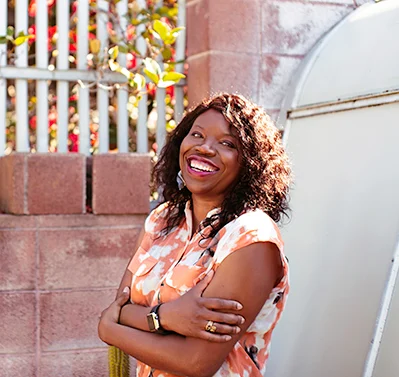

Image by Monument Labs
EMBRACE (Empowering Memory & Belonging through Revival, Art, Culture, and Exchange) is a resident-led group formed last year to steward the development of a commemorative public art installation in Kindlewood’s new park. We’re thrilled to share that the effort has been selected as one of ten national projects in Monument Lab’s 2026 Re:Generation cohort, receiving $100,000 in support. As one of the first new monument-making efforts in Charlottesville in recent years (check out the Swords to Plowshare initiative), the installation will serve as a platform for dialogue, reflection, and collective storytelling, reflecting the broader values guiding the redevelopment. Learn more about Monument Lab’s Re:Generation initiative and the 2026 cohort here.

Image by Envelope Architecture + Design
Studio O is excited to reconnect with longtime collaborator ENVELOPE Architecture + Design to work with the Tenderloin Community Benefit District on their Larkin Street Revival initiative in San Francisco’s Tenderloin neighborhood. The work supports a community-centered approach to corridor improvements, from storefront activations and lighting enhancements to cultural programming that celebrates the corridor’s immigrant heritage. Designed to reduce vacancies, strengthen small businesses, and make the street more welcoming and vibrant, the initiative represents an important step toward a more equitable and resilient future for Larkin Street. Last month, a ribbon cutting with city leaders marked an early milestone in the project’s placemaking efforts: decorative security gates designed by ENVELOPE Architecture + Design. Learn more about the initiative here.

Image by University of Oklahoma
In February, Liz was invited to speak at the University of Oklahoma’s Christopher C. Gibbs College of Architecture as part of the Bruce Goff Chair of Creative Architecture Lecture Series. This distinguished program honors the pedagogical legacy of Bruce Goff by bringing leading designers, thinkers, and practitioners to campus each year. As part of the visit, Liz delivered a public lecture titled “Designing with Purpose in Turbulent Times,” exploring how design can address and heal unjust urban environments and the clarity of that call in our current times. Watch the lecture here.
In case you want to explore the ideas that underpin our work further, you can always view previous newsletters, find more media and more resources on the website!
Sign up for our mailing list to stay up to date with Liz and Studio O
Privacy Policy - COPYRIGHT LIZ OBGU / STUDIO O 2023-2026


Before you go… If this conversation resonated with you, I’d love to continue it.
Holding Space is an occasional newsletter exploring design, justice, grief, healing, and the work of creating possibility.


